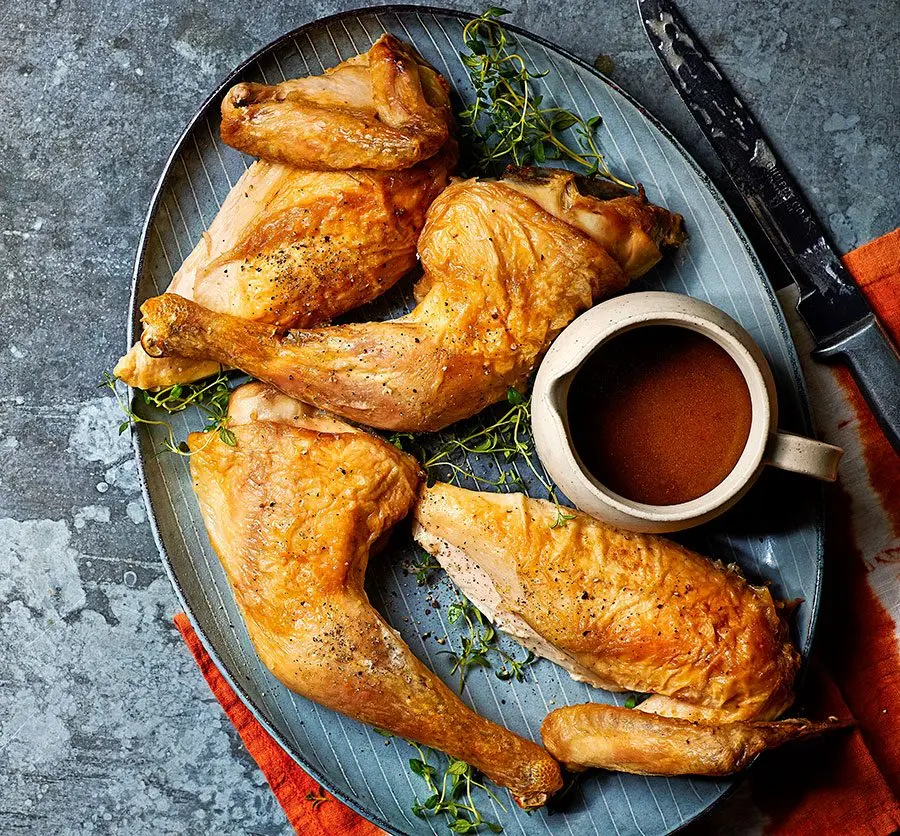
The surprising baking cupboard ingredient that fixes soggy chicken skin
How does baking powder improve chicken skin texture?
A simple kitchen staple can transform your roast chicken, delivering juicy meat, rich gravy, and perfectly crisp skin without the usual trade-offs. Home cooks often struggle with uneven cooking when roasting a whole bird, as the breast and legs require different times to reach ideal doneness. This common dilemma leads to either dry white meat or tough dark meat, but a surprising solution lies in your pantry.
Latest news
 Moe's Southwest Grill Menu Items Ranked from Worst to Best
 Hot Honey Brussels Sprouts: A Sweet‑Spicy Side That Turns Heads
 Turn Your Pasta Sauce Into a Nutritional Powerhouse
 West Coast IPAs vs East Coast IPAs: A Flavor Battle Across the United States
The technique involves applying a light coating of baking powder to the chicken skin before roasting, which raises the pH and promotes browning and crispness through the Maillard reaction. Unlike baking soda, baking powder contains both an acid and a base, making it safe for direct use on poultry without altering flavor. When combined with drying the skin thoroughly and roasting at a high temperature initially, this method helps render fat effectively while protecting the breast from overcooking. The result is a bird with golden, crackling skin and evenly cooked, moist meat throughout.
What other steps ensure even cooking in roast chicken?
Baking powder works by breaking down peptides in the skin and drawing out moisture, which allows the skin to crisp more efficiently during roasting. It also helps the skin render fat faster, reducing the risk of sogginess while keeping the meat underneath juicy. Many professional chefs use this trick to achieve restaurant-quality results at home, especially when aiming for a balance between texture and doneness across different parts of the bird.
To address the differing cooking times of breast and leg meat, experts recommend starting the chicken breast-side down for the first part of roasting, then flipping it to finish breast-side up. This allows the darker, denser leg meat to benefit from more direct heat early on, while the breast is shielded and cooks more gently. Using a meat thermometer to check the thickest part of the thigh (targeting 165°F or 74°C) and letting the bird rest for 15–20 minutes after roasting further ensures juiciness and even heat distribution.
Is baking powder safe to use on chicken skin? Yes, food-grade baking powder is safe and commonly used in cooking to enhance browning and crispness without leaving a metallic taste when used in moderation.
Frequently Asked Questions
Can I use baking soda instead of baking powder? No, baking soda is too alkaline and can impart a soapy or bitter flavor if applied directly to skin; baking powder is preferred because it’s pH-balanced for food use.
Does this method affect the flavor of the gravy? No, the baking powder does not transfer into the pan drippings in a way that alters gravy flavor; it primarily acts on the skin surface and dissipates during cooking.
Content written by Barney Desmazery for fancy-meals.com editorial team, AI-assisted.