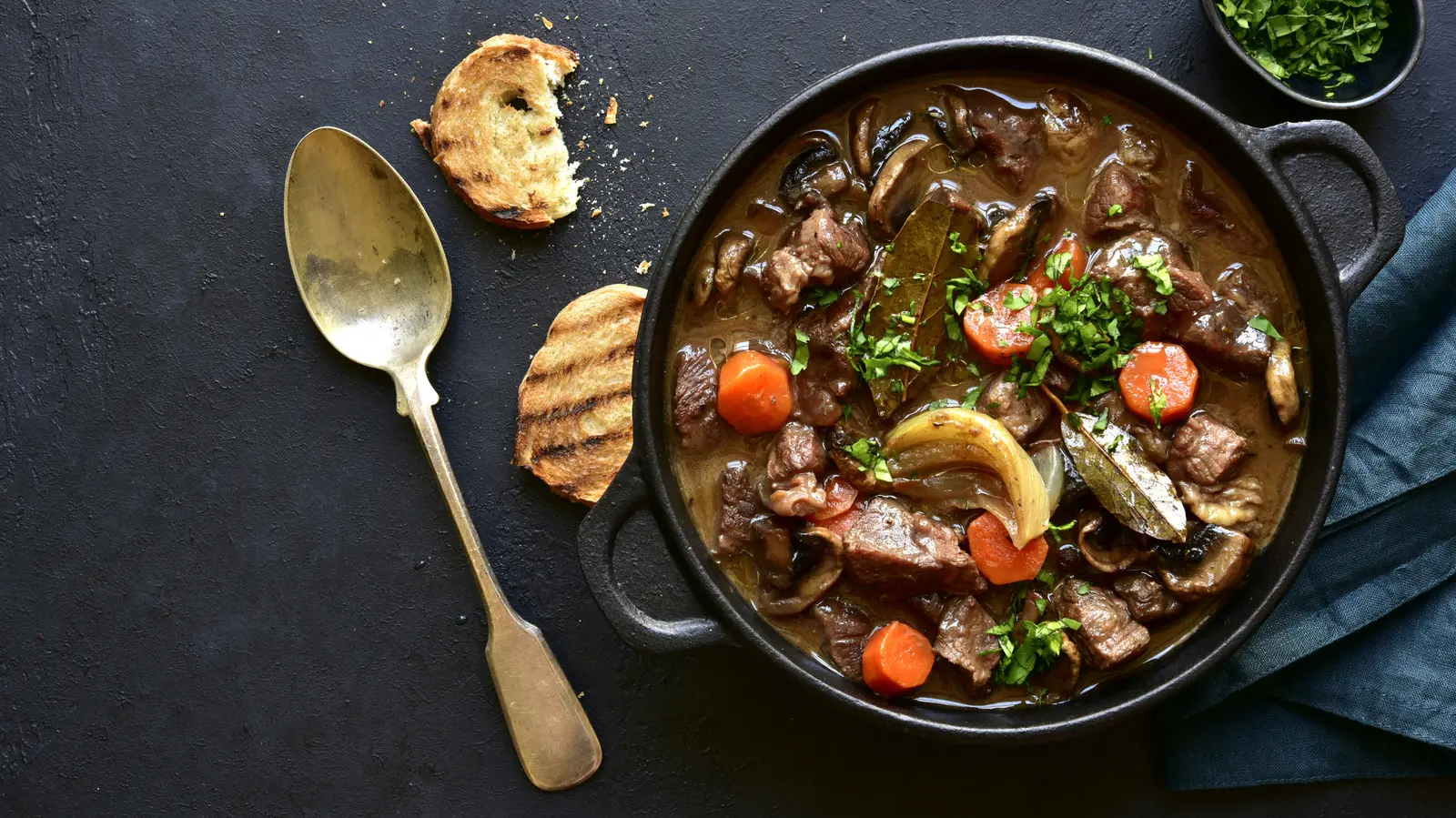
Forget Traditional Beef Stew: The French-Style Daube de Bœuf Is Just as Hearty and Warm
History and Origins
The history of this classic dish dates back to the 14th century in southern France, where it was initially cooked for hours—or even days—over an open fire. In fact, daube de bœuf took its name from the same utensil in which it is cooked—a terracotta clay pot called a daubière. These days, a covered Dutch oven or oven-safe pot will work just fine.
Latest news
 Costco's Frozen Dumpling Lineup, Ranked From Least To Most Tasty
 Best stainless-steel frying pans 2026: expert-tested picks for searing, eggs and daily cooking
 Trader Joe’s First‑Time Shopper Guide: Must‑Try Items
 Panda Express vs P.F. Chang's: Which Orange Chicken Is Healthier?
Starting with beef (hence „bœuf,” which in French means beef), marinated overnight in red wine, aromatics, and of course, Provençal herbs. Accompanying it are other Provençal pantry ingredients, especially olives and capers, together with common stew vegetables such as carrots, onion, fennel, and tomatoes. The aromatics lend the dish a pleasant and fragrant flavor, usually coming from garlic cloves, peppercorns, bouquet garni, and dried orange peels—another characteristic of the beef. Everything is simmered for at least three hours in the wine mixture, until the dish becomes delicious. However, if you truly want this classic daube de bœuf to shine, consider making it a day ahead. A stew where every ingredient counts. Traditionally, beef daube uses inexpensive cuts of beef that lie on the tough and muscular side, such as boneless chuck, beef shank, or beef shank.
Ingredients and Preparation
After hours or days of braising, they will beautifully break down, with gelatin droplets enriching both texture and flavor. Moreover, you do not need to stick strictly to beef, and you can use lamb, mutton, veal, or even pork. Some recipes, like the one from New Orleans, also include ham, which gives the stew a smoky sensation. Not less important is the wine. The best red wine to use in beef daube does not have to be the most expensive. Choose complex, bold, and full-bodied varieties such as Cabernet Sauvignon, Cahors, or Syrah, perhaps even Madiran if you can get your hands on it. Otherwise, white wine is an option if you prefer a subtler and sweeter taste. Although not mandatory, you can add a bit of beef marrow to enrich the rich life of the beef, or perhaps add anchovies and capers to introduce a salty undertone.
Once everything is done, do not forget to pair your daube de bœuf. It is not necessary to say that a red wine is a must. According to the dish’s rich complexity, something with a bold aroma and spicy tone and tannic note should be perfect. Think Rhône or Châteauneuf-du-Pape. As for a side dish, pasta is always a wonderful partner, especially macaronade—a Franco-Italian pasta with beef sauce, or macaroni au gratin, in which the macaroni are layered with three kinds of cheese.
Content written by [email protected] (Luna Regina) for fancy-meals.com editorial team, AI-assisted.