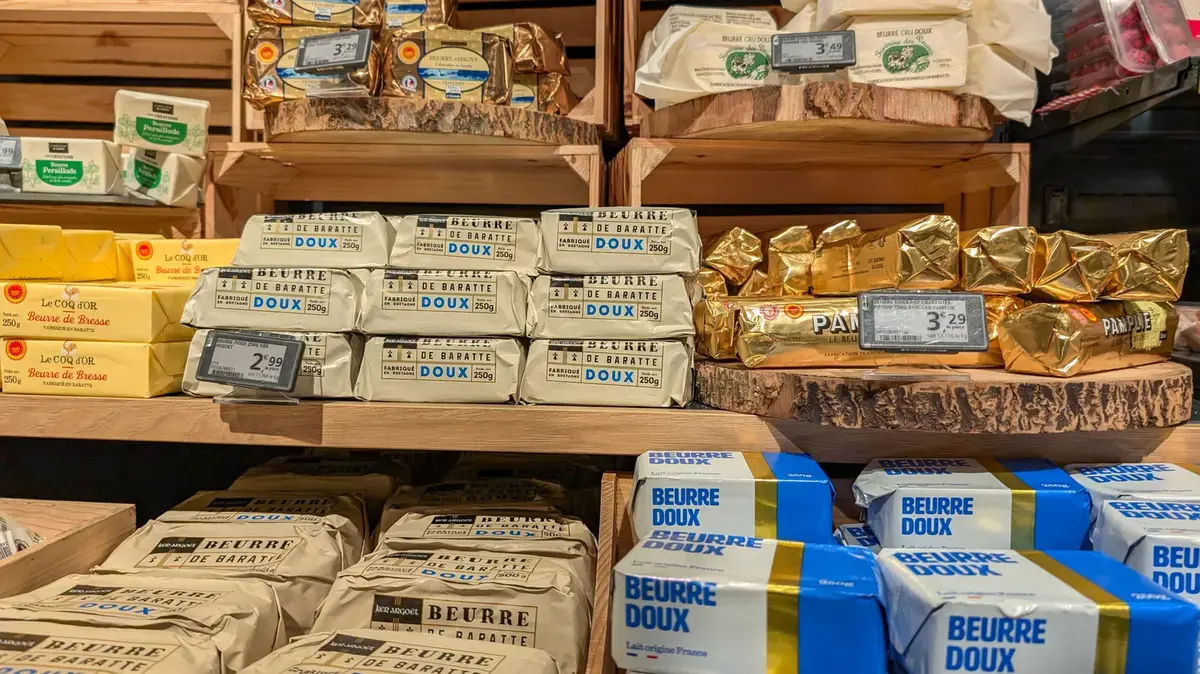
The Distinctive Varieties of French Butter Missing from American Shelves
The Science of Cultured and Salted Profiles
French grocery stores offer a sophisticated selection of butter that remains largely unavailable to American consumers. While the United States primarily stocks standard sweet cream butter, French shoppers choose between diverse textures and flavor profiles. These regional staples reflect a deep-rooted culinary culture that prioritizes fat content, fermentation, and salt crystals.
Latest news
 Costco's Frozen Dumpling Lineup, Ranked From Least To Most Tasty
 Best stainless-steel frying pans 2026: expert-tested picks for searing, eggs and daily cooking
 Trader Joe’s First‑Time Shopper Guide: Must‑Try Items
 Panda Express vs P.F. Chang's: Which Orange Chicken Is Healthier?
The French dairy aisle typically features three distinct categories. First, there is the standard sweet cream butter, similar to American versions but often with higher fat content. Second, producers offer cultured butter, which undergoes a fermentation process to develop a tangy, complex flavor. Finally, artisanal salted butters often contain visible, crunchy sea salt crystals that provide a sharp contrast to the rich, creamy base.
Cultured butter distinguishes itself through the addition of lactic acid bacteria. This process mimics the traditional method of churning cream that has naturally soured over time. The result is a deeper, more nuanced taste that complements fresh bread and delicate pastries. Manufacturers carefully control these bacterial cultures to ensure consistency while maintaining the traditional profile expected by local diners.
Why Are These Varieties Rare in the US?
Salted butter in France serves as more than just a seasoning. Many regions, particularly Brittany, produce butter with coarse sea salt harvested from local marshes. Unlike the fine, uniform salt found in American sticks, these large grains create an uneven, exciting texture. This approach elevates the butter from a mere cooking ingredient to a standalone component of a meal.
The scarcity of these products in American markets stems from differing industrial standards and consumer habits. American dairy production prioritizes high-volume, uniform products that remain stable during long-distance shipping. In contrast, French production often relies on smaller batches and specific regional techniques that are difficult to replicate at scale. Furthermore, the American palate has historically favored milder, sweet cream varieties over the bold, acidic notes found in fermented European alternatives.
As interest in global culinary traditions grows, some high-end grocers have begun importing these specialized items. However, they remain a luxury rather than a household staple. Consumers seeking these authentic flavors must often turn to specialty cheese shops or boutique importers. The divide between these markets highlights the fundamental differences in how each nation approaches basic dairy staples.
Frequently Asked Questions
What makes French butter different from American butter? French butter typically has a higher butterfat content, often exceeding 82 percent. This extra fat creates a richer texture and a more luxurious mouthfeel compared to standard American varieties.
Why does some French butter have a tangy taste? The tanginess comes from the culturing process. By introducing specific bacteria to the cream before churning, producers create a complex, slightly acidic flavor profile that is absent in sweet cream butter.
Can I find these French styles in regular American grocery stores? Most standard American supermarkets do not carry authentic French-style cultured or coarse-salt butter. You are more likely to find these specialty products at dedicated cheese shops or upscale, gourmet food markets.
Content written by Victoria Lane for fancy-meals.com editorial team, AI-assisted.