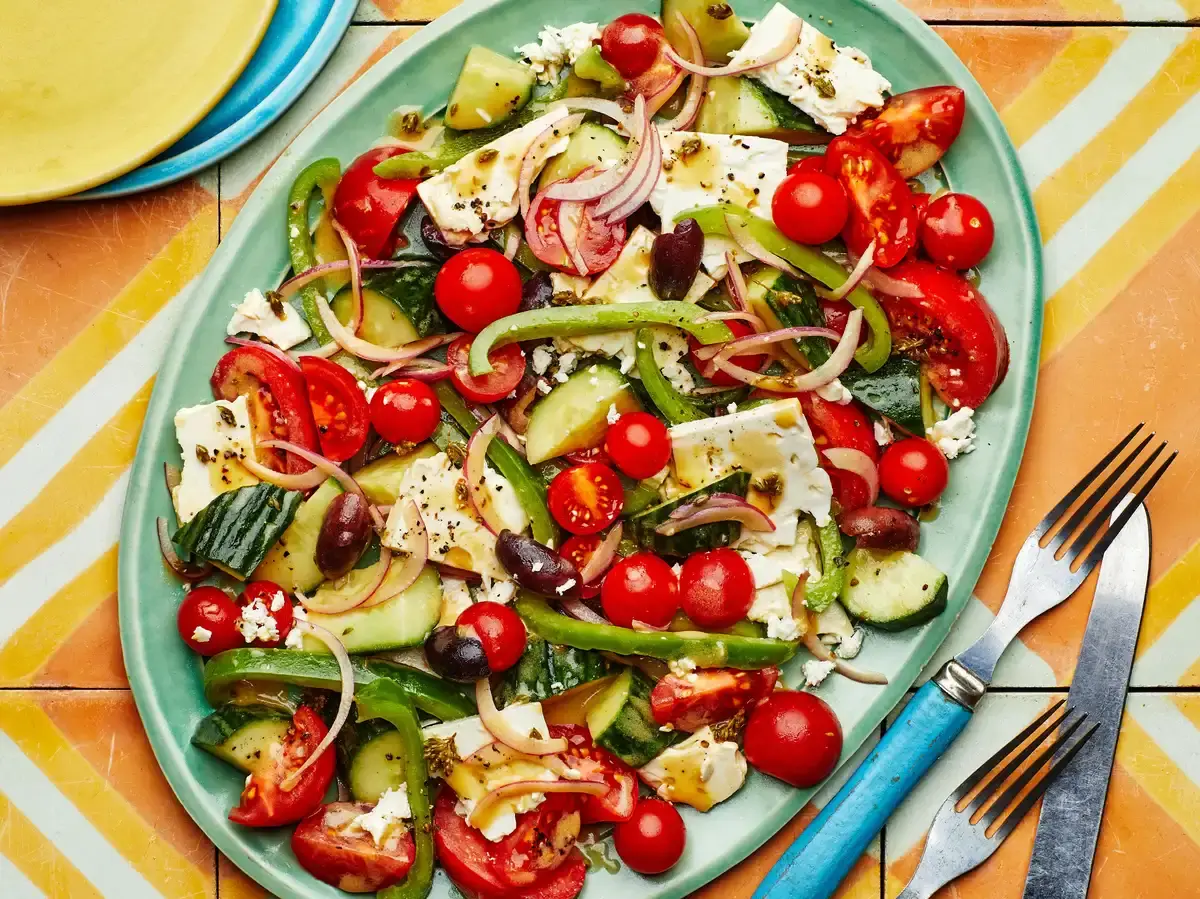
Greek Salad: A Refreshing Classic
The Importance of Quality Ingredients
This recipe details a traditional Greek salad. It’s a vibrant dish perfect as a side or light meal. The salad combines fresh vegetables with tangy flavors. It’s ideal for enjoying with grilled meats or on its own.
Latest news
 Moe's Southwest Grill Menu Items Ranked from Worst to Best
 Hot Honey Brussels Sprouts: A Sweet‑Spicy Side That Turns Heads
 Turn Your Pasta Sauce Into a Nutritional Powerhouse
 West Coast IPAs vs East Coast IPAs: A Flavor Battle Across the United States
Greek salad, known as horiatiki in Greece, is a staple of Mediterranean cuisine. Its simplicity highlights the quality of its ingredients. Traditionally, it doesn't actually include lettuce. The focus is on ripe tomatoes, crisp cucumbers, and briny olives.
The key to a great Greek salad lies in the freshness of the produce. Ripe, flavorful tomatoes are essential. Cucumbers should be firm and crunchy, not soft or watery. Kalamata olives provide a distinctive, salty bite. Red onion adds a sharp contrast to the other flavors.
Can You Adapt This Traditional Recipe?
A generous block of feta cheese is the crowning glory. Authentic feta is made from sheep’s milk, giving it a unique tang. It’s typically added in a single slab, not crumbled. This allows diners to break off pieces as they eat. A simple dressing of olive oil and red wine vinegar ties everything together.
While tradition is important, slight adjustments are acceptable. Some cooks add green bell peppers for extra crunch. Others include a sprinkle of dried oregano for enhanced aroma. However, purists maintain that keeping the ingredients minimal is best. This allows the natural flavors to shine through.
The salad’s versatility makes it a crowd-pleaser. It pairs well with grilled lamb, chicken, or fish. It’s also a satisfying vegetarian option for lunch or a light dinner. The bright, refreshing flavors are especially welcome during warmer months.
Frequently Asked Questions
Ultimately, a well-made Greek salad is more than just a combination of vegetables. It's a taste of the Mediterranean, a celebration of fresh, simple ingredients. Its enduring popularity speaks to its timeless appeal.
What kind of olives should I use? Kalamata olives are traditional for Greek salad. Their rich, fruity flavor and dark color are characteristic of the dish. Other brined olives can be substituted, but the taste won't be quite the same.
Is it necessary to use sheep’s milk feta? While cow’s milk feta is available, sheep’s milk feta is more authentic. It has a tangier, more complex flavor that elevates the salad. Look for feta specifically labeled sheep's milk fetafor the best results.
Content written by Victoria Lane for fancy-meals.com editorial team, AI-assisted.