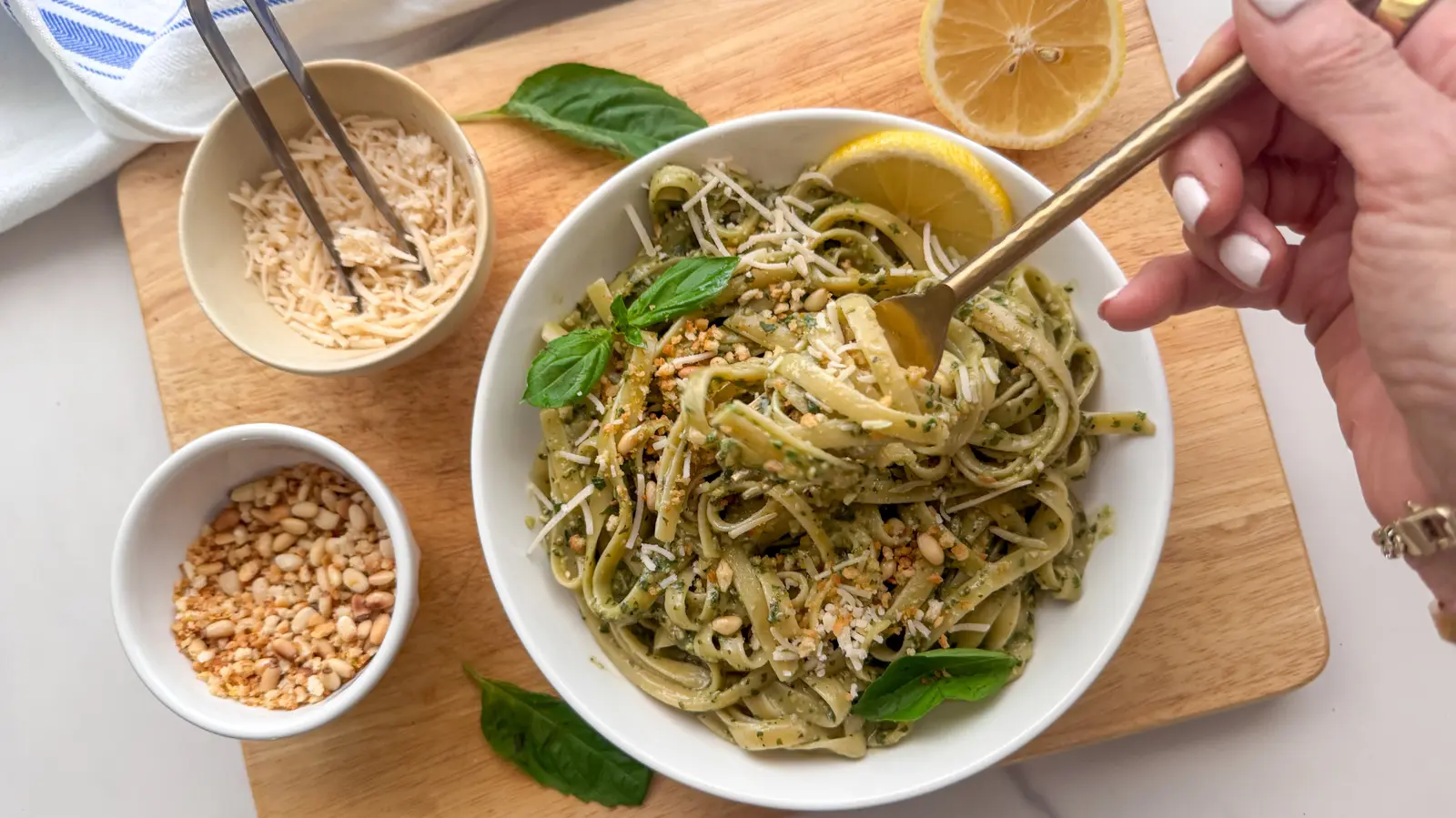
Creamy Pesto Pasta: A Rich Twist on an Italian Classic
Balancing Freshness with Heavy Dairy Ingredients
A new culinary trend highlights a rich variation of traditional pesto sauce. This dish combines fresh herbs with heavy cream and parmesan cheese. The result is a luxurious pasta meal. It serves as a modern take on a centuries-old Italian staple. Home cooks are embracing this creamy adaptation. The recipe offers a comforting alternative to standard oil-based preparations. It appeals to those seeking depth and richness in their dinner options.
Latest news
 Anthony Bourdain’s Most Unforgettable Meals on „No Reservations”
 Mastering the Art of Perfect Pie Baking
 Chocolate Peppermint Whoopie Pies: Holiday Treats Made Easy With Boxed Mix
 Ree Drummond Shares 10 Tips for the Perfect Thanksgiving Turkey
The foundation of this dish remains the classic pesto base. Originating from Genoa, Italy, traditional pesto relies on basil, garlic, pine nuts, and olive oil. However, this specific version alters the texture significantly. By blending the herb mixture with cream, the sauce becomes thicker. Adding grated parmesan enhances the savory profile. This method creates a coating that clings tightly to pasta. The flavor profile shifts from sharp and acidic to mellow and indulgent. It transforms a light side dish into a hearty main course.
The key to success lies in balancing two distinct flavor profiles. Fresh basil provides a bright, green note that cuts through richness. Cream adds a smooth, velvety body to the final product. Parmesan contributes umami depth and a salty finish. Cooks must be careful not to overcook the basil. Heat can turn the vibrant green color to a dull olive hue. It can also diminish the fresh aroma. Therefore, many recipes suggest adding the pesto off the heat. This preserves the delicate herbal notes. The dairy components require gentle stirring to prevent separation. The goal is a cohesive, emulsified sauce. This technique ensures every strand of pasta is evenly coated. The visual appeal is also important. A glossy, green-white swirl looks inviting on the plate.
Why This Variation Gains Popularity Among Home Chefs
Home cooks often seek ways to elevate simple ingredients. Pesto is widely available in jars, but making it from scratch is rewarding. Using fresh herbs allows for better control over quality. The addition of cream makes the dish feel more substantial. It satisfies cravings for comfort food without complex cooking techniques. The preparation time remains relatively short. Most steps involve chopping and blending. No advanced culinary skills are required. This accessibility drives its popularity in weekly meal planning. It works well as a quick weeknight dinner. It also holds up well for entertaining guests. The creamy texture pairs well with various proteins. Shrimp, chicken, or white fish can be added easily. Even a simple salad on the side complements the dish. The versatility keeps it in rotation for many households.
This shift toward richer pesto variations reflects broader dining trends. People are moving away from strictly low-fat preparations. They prioritize taste and satisfaction in home cooking. The combination of traditional roots with modern indulgence works well. It honors the original Genoese heritage while adapting to current preferences. As more home cooks experiment with dairy additions, we may see further innovations. The core principle remains simple: enhance the base with complementary fats. This approach ensures the herb flavors remain prominent. The dish stands as a testament to flexible cooking. It proves that classic recipes can evolve. Future iterations might include different cheeses or even non-dairy alternatives. For now, the cream-and-parmesan version remains a standout favorite. It delivers a satisfying, flavorful experience that resonates with many diners.
Frequently Asked Questions
Can I use store-bought pesto for this recipe? Yes, you can substitute jarred pesto for homemade. Just ensure you add the cream and parmesan separately. Stir gently until melted and combined.
What type of pasta works best? Short shapes like rigatoni or fusilli hold the sauce well. Long strands like linguine also work. Choose a shape that traps the creamy mixture.
How long does the sauce last in the fridge? Store leftovers in an airtight container. It stays fresh for about three days. Reheat gently with a splash of milk or water.