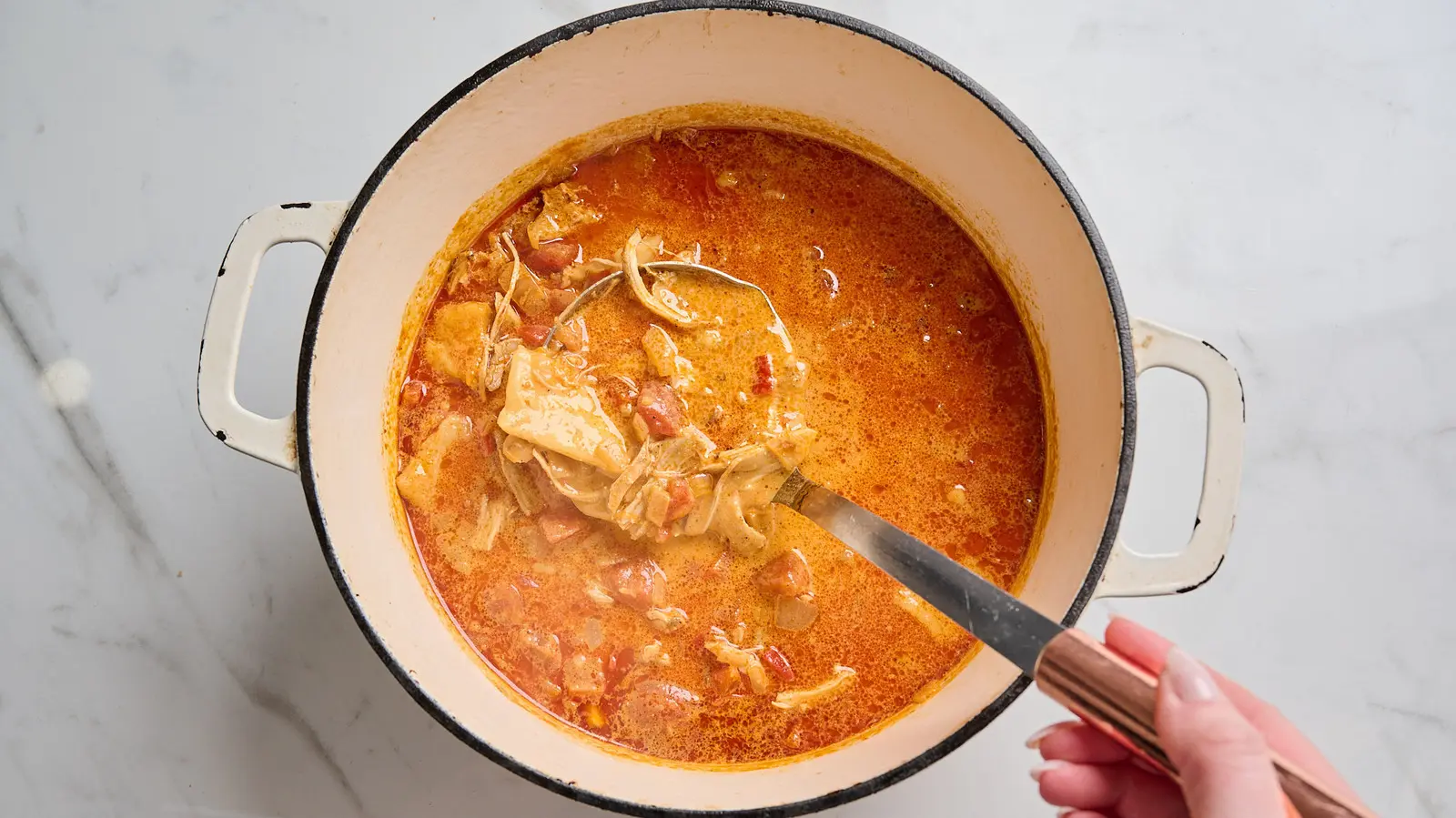
Chicken and dumplings get a savory upgrade with tomatoes
Balancing Acidity With Creamy Richness
A beloved Southern staple receives a simple culinary twist that enhances its warmth. Home cooks are adding fresh tomatoes to the classic creamy broth. This modification transforms the dish into a richer, more complex meal. The addition brings depth without overwhelming the traditional flavors. It appeals to those seeking extra comfort in their cooking.
Latest news
 Anthony Bourdain’s Most Unforgettable Meals on „No Reservations”
 Mastering the Art of Perfect Pie Baking
 Chocolate Peppermint Whoopie Pies: Holiday Treats Made Easy With Boxed Mix
 Ree Drummond Shares 10 Tips for the Perfect Thanksgiving Turkey
The core concept remains unchanged from traditional recipes. Cooks still prepare tender chicken pieces alongside soft, pillowy dumplings. However, the liquid base shifts significantly. Instead of relying solely on heavy cream or butter for richness, tomatoes introduce acidity. This balances the fat content effectively. The result is a soup that feels lighter yet deeply satisfying. Many chefs argue this version tastes superior during colder months. It provides a vibrant contrast to the pale dumplings floating within the bowl.
The key to success lies in the ratio of ingredients. Too much tomato can make the broth taste like a stew rather than a soup. A moderate amount preserves the silky texture of the original recipe. Home cooks often use canned diced tomatoes for convenience. Fresh varieties work well if available during peak season. The acidity cuts through the richness of the cream base. This creates a harmonious flavor profile that lingers on the palate.
Does This Twist Change The Traditional Identity?
Many enthusiasts note that the color change is visually appealing. The white dumplings stand out against the reddish-orange broth. This visual element makes the dish more inviting on the dinner table. The aroma also changes, becoming fresher and more aromatic. It moves away from purely dairy notes toward herbal and fruity undertones. This shift makes the meal feel less heavy after a large portion.
Purists might debate whether adding tomatoes alters the essence of the dish. Traditionalists often prefer the pure, white appearance of classic versions. They view the tomato addition as a modern deviation from heritage recipes. However, most home cooks embrace the flexibility of the dish. Food history shows that regional variations always exist. What matters is the final taste and emotional satisfaction.
The tomato-enhanced version bridges old and new preferences. It respects the foundation while offering novelty. Families often split the difference by making two batches. One serves the traditionalists, while the other pleases adventurous eaters. This approach ensures everyone at the table finds their preferred style. It turns a single meal into a social experience centered on choice.
Frequently Asked Questions
How many tomatoes should I add to a standard pot? Add one cup of diced tomatoes for every four servings. Adjust based on personal preference for acidity. Start small to avoid overpowering the delicate dumpling flavors.
Can I use fresh tomatoes instead of canned? Yes, fresh tomatoes work well if peeled and chopped. Canned options provide consistent texture and flavor year-round. Both methods yield excellent results in the final dish.
Does this twist affect cooking time? No significant changes to timing are required. The tomatoes cook down quickly within the simmering broth. Monitor the dumplings to ensure they remain fluffy and tender.