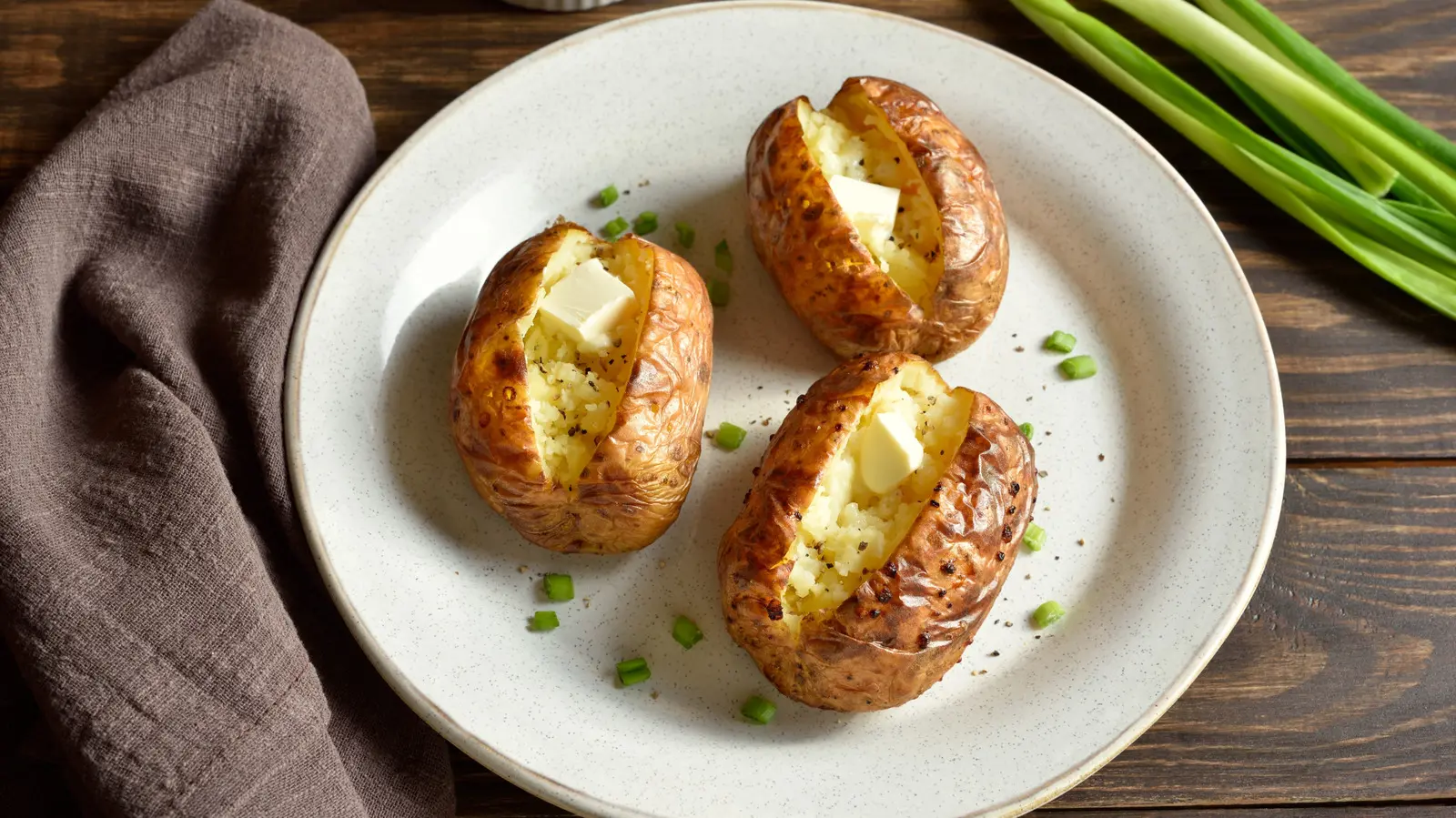
Baked Potatoes Get a Nutty Upgrade with a New Fat
The Science Behind the Sweetness
A new cooking fat is turning the humble baked potato into a gourmet experience. Instead of the usual butter or oil, chefs are using a sweet, nutty, toasty oil that promises richer flavor and a healthier profile. The trend is gaining traction in restaurants and home kitchens alike, offering a simple yet transformative change.
Latest news
 Anthony Bourdain’s Most Unforgettable Meals on „No Reservations”
 Mastering the Art of Perfect Pie Baking
 Chocolate Peppermint Whoopie Pies: Holiday Treats Made Easy With Boxed Mix
 Ree Drummond Shares 10 Tips for the Perfect Thanksgiving Turkey
The fat, derived from toasted nuts, contains a high concentration of polyunsaturated fats and natural sugars. It melts at a lower temperature than butter, allowing it to coat the potato skin evenly without burning. Chefs say the result is a crispy exterior and a moist interior, with a caramelized aroma that lingers on the plate.
Researchers at the Culinary Institute of America have analyzed the oil’s composition. They found that the nut-derived fat contains up to 30% natural sugar, which caramelizes during baking. This process creates a subtle sweetness that balances the potato’s earthy taste. Additionally, the oil’s high monounsaturated fat content reduces the risk of heart disease compared to saturated butter.
Is It Worth the Switch?
Nutritionists note that the oil’s vitamin E content boosts antioxidant intake. „It’s a win-win,” says Dr. Elena Ruiz, a dietitian who tested the oil in a 12‑week study. „Participants reported improved taste satisfaction and a 15% reduction in overall calorie consumption.”
Many food bloggers are debating whether the nutty oil is a fad or a lasting trend. One popular cooking channel compared the oil to traditional butter side by side. Viewers praised the oil’s ability to keep the potato moist without greasiness. „It’s like butter with a better conscience,” one commenter wrote.
However, cost remains a factor. The nut oil is priced 20% higher than standard butter. Some chefs argue that the premium is justified by the unique flavor profile and potential health benefits. Others suggest using a blend of the oil with a small amount of butter to keep prices down while still enjoying the taste.
Potential Impact on the Food Industry
The introduction of this nut‑based fat could reshape how restaurants approach side dishes. By offering a healthier alternative, establishments may attract health‑conscious diners. Moreover, the oil’s shelf life of six months surpasses that of many vegetable oils, reducing waste.
Retailers are already stocking the oil in specialty food aisles. Early sales data from a major grocery chain show a 12% increase in purchases during the first month of launch. If the trend continues, the oil could become a staple in both commercial kitchens and home pantries.
Frequently Asked Questions
What nuts are used to make the oil? The oil is extracted from toasted almonds and walnuts, which provide the distinct sweet and nutty flavor.
Can I use this oil for other dishes? Yes, it works well for sautéing vegetables, roasting meats, and even baking bread, offering a subtle sweetness and healthy fats.
Is the oil suitable for people with nut allergies? No. The oil contains trace amounts of almond and walnut proteins, so it should be avoided by those with nut allergies.