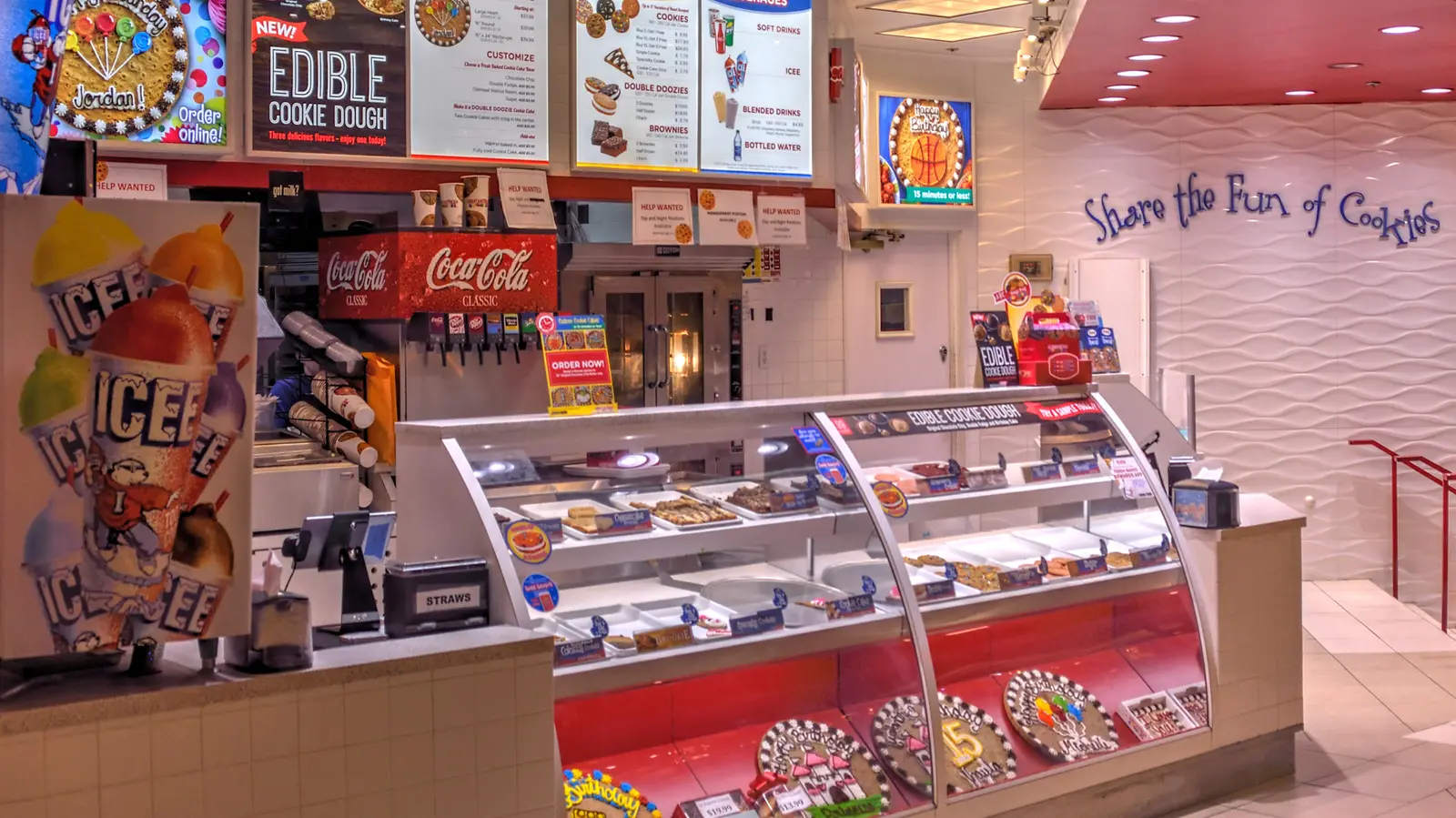
Mall Food Courts: The Cookie Slices That Defined '80s Shopping Trips
Why Slice Pricing Made the Bakery a Mall Institution
In the 1980s and 1990s, shopping malls were the social center of youth culture. Food courts inside these malls featured a specific bakery that sold cookies by the slice. This simple business model created a shared experience for millions of young shoppers.
Latest news
 What Likely Appeared on the First Thanksgiving Menu in 1621
 Anthony Bourdain’s Most Unforgettable Meals on „No Reservations”
 Mastering the Art of Perfect Pie Baking
 Chocolate Peppermint Whoopie Pies: Holiday Treats Made Easy With Boxed Mix
The bakery operated from a small kiosk in the food court. Customers could buy a single slice of cookie rather than a whole one. This pricing strategy made treats accessible to kids with limited pocket money. The store became a landmark destination during weekend trips.
Selling cookies by the slice lowered the entry price point dramatically. A whole cookie might cost too much for a young shopper, but a slice was affordable. This approach turned a simple snack into a ritual. Friends would meet at the bakery after shopping. The shared experience strengthened the mall's role as a social hub.
Did the Cookie Bakery Survive the Mall Decline?
The bakery's success relied on consistent quality and familiar flavors. Customers knew exactly what to expect each visit. This reliability built loyalty across generations. Many adults today recall the smell of fresh cookies as a trigger for nostalgia.
As mall traffic dropped in the 2000s and 2010s, many food court tenants closed. The cookie bakery faced the same pressure. Some locations survived by adapting to online ordering or relocating. Others disappeared along with the food courts themselves.
The decline of the mall era left a cultural gap. Young people no longer gather in one place to shop and eat together. The cookie bakery symbolized a time when physical spaces drove social connection. Its legacy lives on in the memories of those who grew up in the '80s and '90s.
Frequently Asked Questions
Why did the bakery sell cookies by the slice? Slice pricing made cookies affordable for young shoppers with limited budgets. It turned a treat into an accessible part of the mall experience.
What happened to these bakeries as malls declined? Many closed when food courts shut down or traffic dropped. Some adapted through online sales or relocation, but most disappeared with the mall era.
What made the bakery a cultural landmark? It offered a consistent, affordable snack that anchored social gatherings. The shared ritual of buying a slice created lasting memories for a generation.